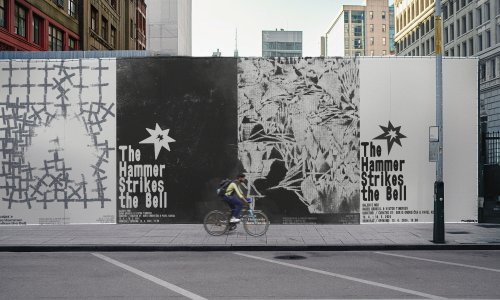
Radek Brousil & Viktor Timofeev: The Hammer Strikes the Bell
How can one depict the city today when it is no longer merely an urban whole, but also a psychic landscape, a data infrastructure, and a space of permanent tension? And how can one grasp the metropolis at the moment when its everyday reality breaks down into layers of personal projections, collective affects, and invisible systems that shape our movements, relationships, and modes of perception? The international exhibition project The Hammer Strikes the Bell by New York-based Latvian artist Viktor Timofeev and Czech artist Radek Brousil, prepared together with curators Boris Ondreička and Pavel Kubesa for Prague’s NoD Gallery, enters precisely this field of meaning. Here, the city does not appear as a stable backdrop, but as a living, multilayered organism in which subjective experience collides with the logic of late-postmodern infrastructures. The joint project by Brousil and Timofeev is conceived as a complex exhibition situation in which images, drawings, and a spatial site-specific installation are interwoven into a scenographic whole. The exhibition reflects the specific chronotope of the metamodern gigapolis — a city that is simultaneously a concrete place and a mental state, a set of material structures and a field of imagination. The artists are interested in the intricate image of buildings, people, technologies, and collective psyche that emerges from the structures of today’s metropolises. The exhibition is therefore not built on a mere dialogue between two media or two artistic signatures. More important is the very nature of their encounter: both Brousil and Timofeev have long cultivated a sensitivity to what remains beneath the surface of the visible world, whether power regimes, infrastructures, cultural codes, or unspoken models of identity. From this perspective, The Hammer Strikes the Bell transforms the gallery space into a situation in which the city becomes not only a theme, but also a method. The viewer does not enter a closed narrative, but rather a mutable scenery in which a wide range of individual and collective dramas may unfold. Viktor Timofeev (*1984), whose practice clearly extends beyond the framework of Central and Eastern Europe, is an internationally established artist living and working in New York, whose interdisciplinary practice brings together drawing, painting, video, sound, software, and experimental games into complex environments situated at the intersection of autofiction, worldbuilding, and systems thinking. In 2025, he presented his most extensive museum exhibition to date, Other Passengers, at the Latvian National Museum of Art in Riga; he has also exhibited at the Hessel Museum of Art in New York, Bozar in Brussels, and the National Gallery in Prague. Radek Brousil (*1980) enters this dialogue as an artist who has long reflected on the relationship between image, material, and social reality. In his post-photographic approach, he combines photography with textile, object, video, installation, and painting, and consistently engages with socio-political and environmental themes, postcolonial tendencies, and the question of a “new sensibility.” His work grows out of a critical relationship to standardized interpretations of late capitalism, the Anthropocene, and global power relations, and has increasingly also turned toward the politics of time. Brousil is among the notable figures of the Czech art scene with strong international experience, as confirmed by his projects in London, Brussels, Budapest, Tokyo, and other institutions.
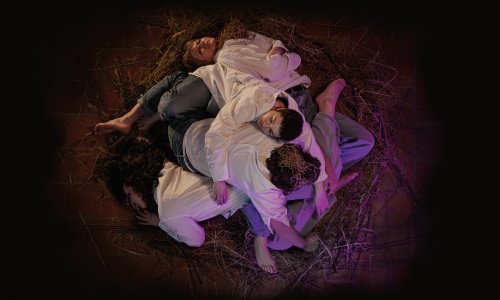
HAMU Graduate Choreography Showcase
An evening of graduation projects by third-year choreography students at the Academy of Performing Arts (HAMU). Nadkroví Barbora Sváčkov…

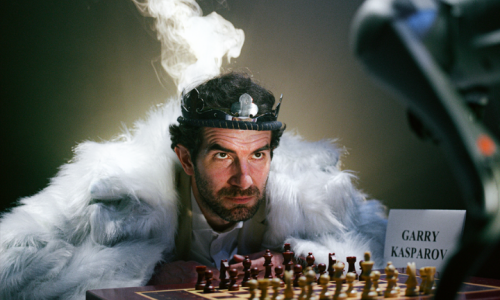
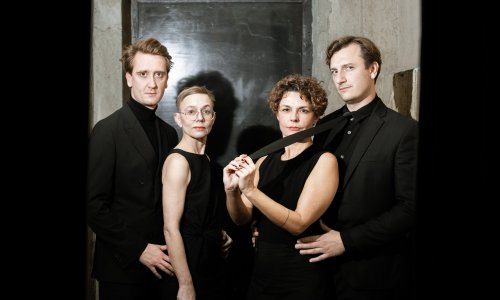
ŠPIONI / Brémy
This performance is in Czech only!

JÁ, DIAGNÓZA / + - VeDvou
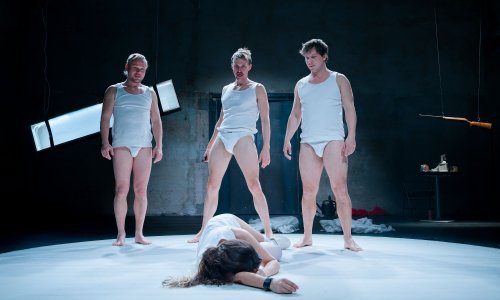
JAK SE DĚLÁ DIVADLO / Divadlo MASO
This performace is in Czech only.
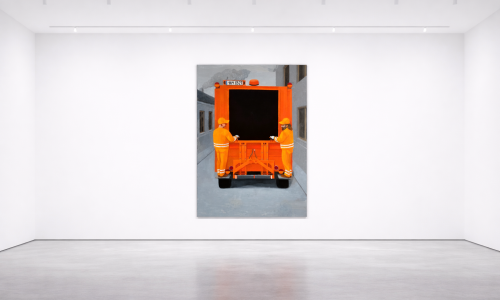

27 LITRŮ UMĚLÝ KRVE / Janek & Natálka & kol.
27 LITRŮ UMĚLÝ KRVE / Janek & Natálka & kol.
27 LITRŮ UMĚLÝ KRVE / Janek & Natálka & kol.
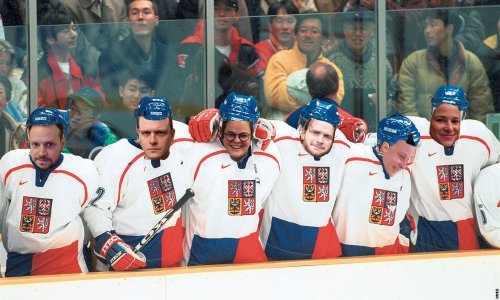

THE LEGEND OF LUNETIC / Janek & Natálka & kol.
This performance is in Czech only!
THE LEGEND OF LUNETIC / Janek & Natálka & kol.
This performance is in Czech only!
THE LEGEND OF LUNETIC / Janek & Natálka & kol.
This performance is in Czech only!
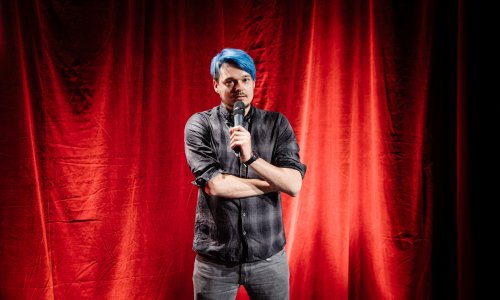

SCAMMERS ATTACK / Janek & Natálka & collective
Scamming is art. They have been with us since the beginning of mankind. They are all around us. And they are more and more of them. There´s no place you…
SCAMMERS ATTACK / Janek & Natálka & collective
Scamming is art. They have been with us since the beginning of mankind. They are all around us. And they are more and more of them. There´s no place you…

FAKE CRIME / Joke Division
This performance is in Czech only!
THE LEGEND OF LUNETIC / Janek & Natálka & kol.
This performance is in Czech only!
THE LEGEND OF LUNETIC / Janek & Natálka & kol.
This performance is in Czech only!
THE LEGEND OF LUNETIC / Janek & Natálka & kol.
This performance is in Czech only!
27 LITRŮ UMĚLÝ KRVE / Janek & Natálka & kol.
27 LITRŮ UMĚLÝ KRVE / Janek & Natálka & kol.
27 LITRŮ UMĚLÝ KRVE / Janek & Natálka & kol.

UNDERGROUND COMEDY CLUB
This performance is in Czech only.
JAK SE DĚLÁ DIVADLO / Divadlo MASO
This performace is in Czech only.
THE LEGEND OF LUNETIC / Janek & Natálka & kol.
This performance is in Czech only!
THE LEGEND OF LUNETIC / Janek & Natálka & kol.
This performance is in Czech only!
THE LEGEND OF LUNETIC / Janek & Natálka & kol.
This performance is in Czech only!
FAKE CRIME / Joke Division
This performance is in Czech only!
UNDERGROUND COMEDY CLUB
This performance is in Czech only.
27 LITRŮ UMĚLÝ KRVE / Janek & Natálka & kol.
27 LITRŮ UMĚLÝ KRVE / Janek & Natálka & kol.
27 LITRŮ UMĚLÝ KRVE / Janek & Natálka & kol.
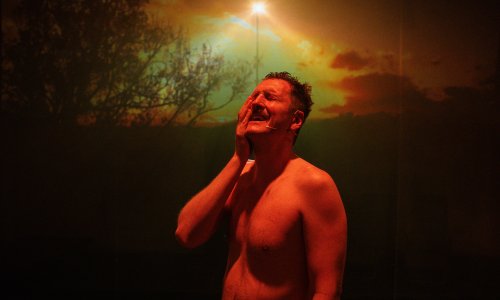
8 BILLION PEOPLE ARE BURNING / 8lidí
A new original production by the creative collective 8lidí. Pleasant heat. Thick steam. The scent of citrus. Western society relaxes in sauna worlds,…
THE LEGEND OF LUNETIC / Janek & Natálka & kol.
This performance is in Czech only!
THE LEGEND OF LUNETIC / Janek & Natálka & kol.
This performance is in Czech only!
JAK SE DĚLÁ DIVADLO / Divadlo MASO
This performace is in Czech only.
SCAMMERS ATTACK / Janek & Natálka & collective
Scamming is art. They have been with us since the beginning of mankind. They are all around us. And they are more and more of them. There´s no place you…
SCAMMERS ATTACK / Janek & Natálka & collective
Scamming is art. They have been with us since the beginning of mankind. They are all around us. And they are more and more of them. There´s no place you…
JÁ, DIAGNÓZA / + - VeDvou
FAKE CRIME / Joke Division
This performance is in Czech only!
UNDERGROUND COMEDY CLUB
This performance is in Czech only.


